

Amsterdam is a remarkable place. A city built by people who looked at the sea and thought, “No. You move.”
Everywhere you look there are bicycles. Thousands of them. Millions, probably. Leaning against bridges, floating in canals, chained to other bicycles in some sort of Dutch mating ritual. In most countries, a bike is something you buy because you lost your driving licence. In Amsterdam, it’s the dominant species.
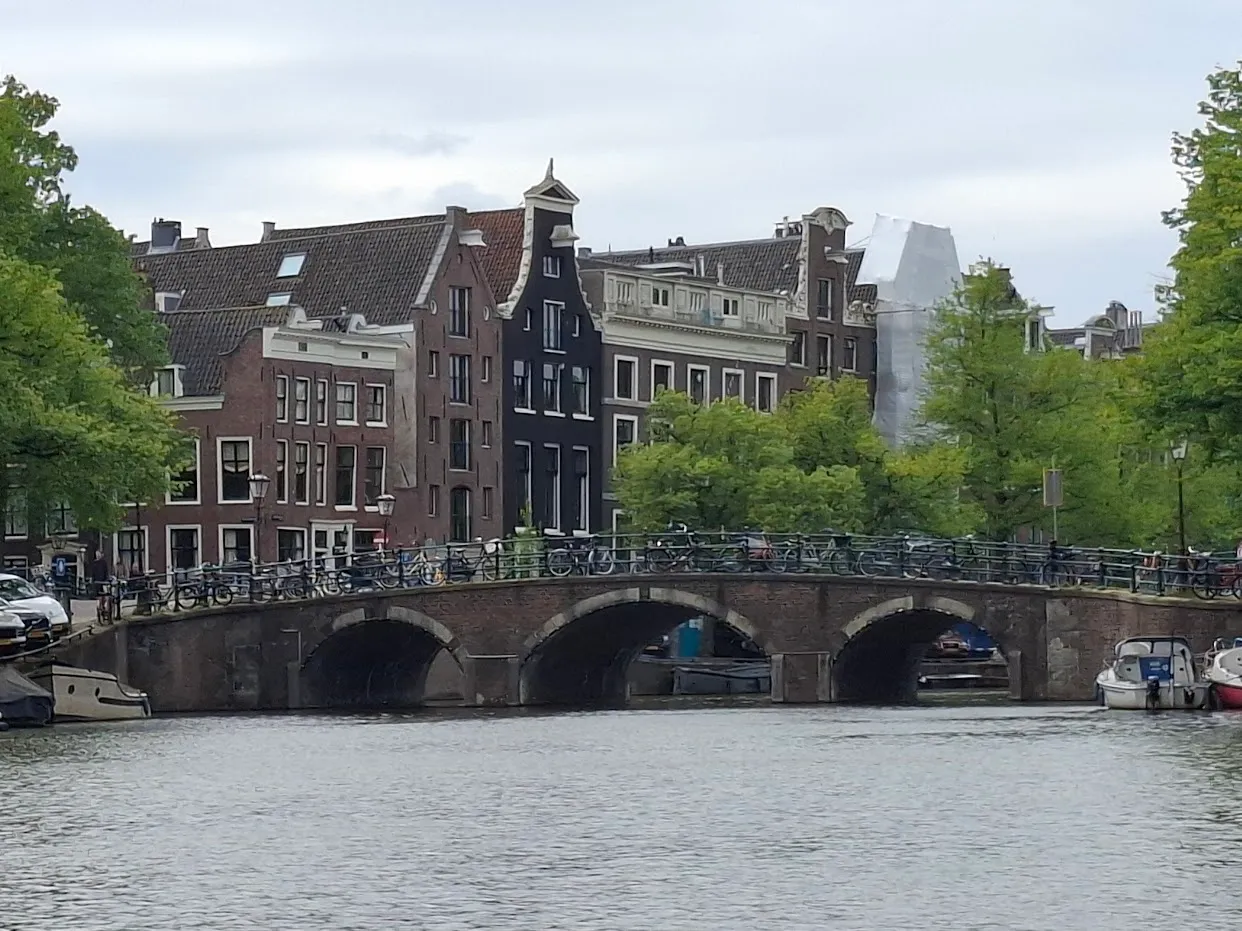
And the canals. Beautiful, calm, historic canals lined with elegant houses that somehow lean at angles which would have an engineer in Birmingham quietly weeping into his tea. Yet they’ve stood there for 400 years while modern apartment blocks collapse if someone sneezes too aggressively nearby.
The people are annoyingly efficient. Trains arrive on time. Roads are smooth. Even the pigeons seem organised. You get the feeling that if the Dutch ran the Sahara Desert, they’d have installed drainage by Thursday.
But what really defines Amsterdam is the atmosphere. It’s relaxed in a way the rest of the world pretends to be after three pints. People sit outside in the cold as if 4°C and sideways rain are somehow “pleasant terrace weather.” And nobody appears remotely stressed, despite navigating traffic systems that resemble the architecture of an NVidia GPU.
Of course, there are tourists everywhere. Wandering into cycle lanes with the survival instincts of boiled potatoes. Within minutes you learn that the quickest way to end your holiday is to step casually in front of a Dutch woman on an e-bike travelling at Mach 2 while carrying tulips, groceries and I swear … a whole pineapple underneath her armpits.
And yet, somehow, it all works.
Amsterdam is civilised chaos. A city where history, engineering, stubbornness and mild insanity combine to create one of the most charming places on Earth.
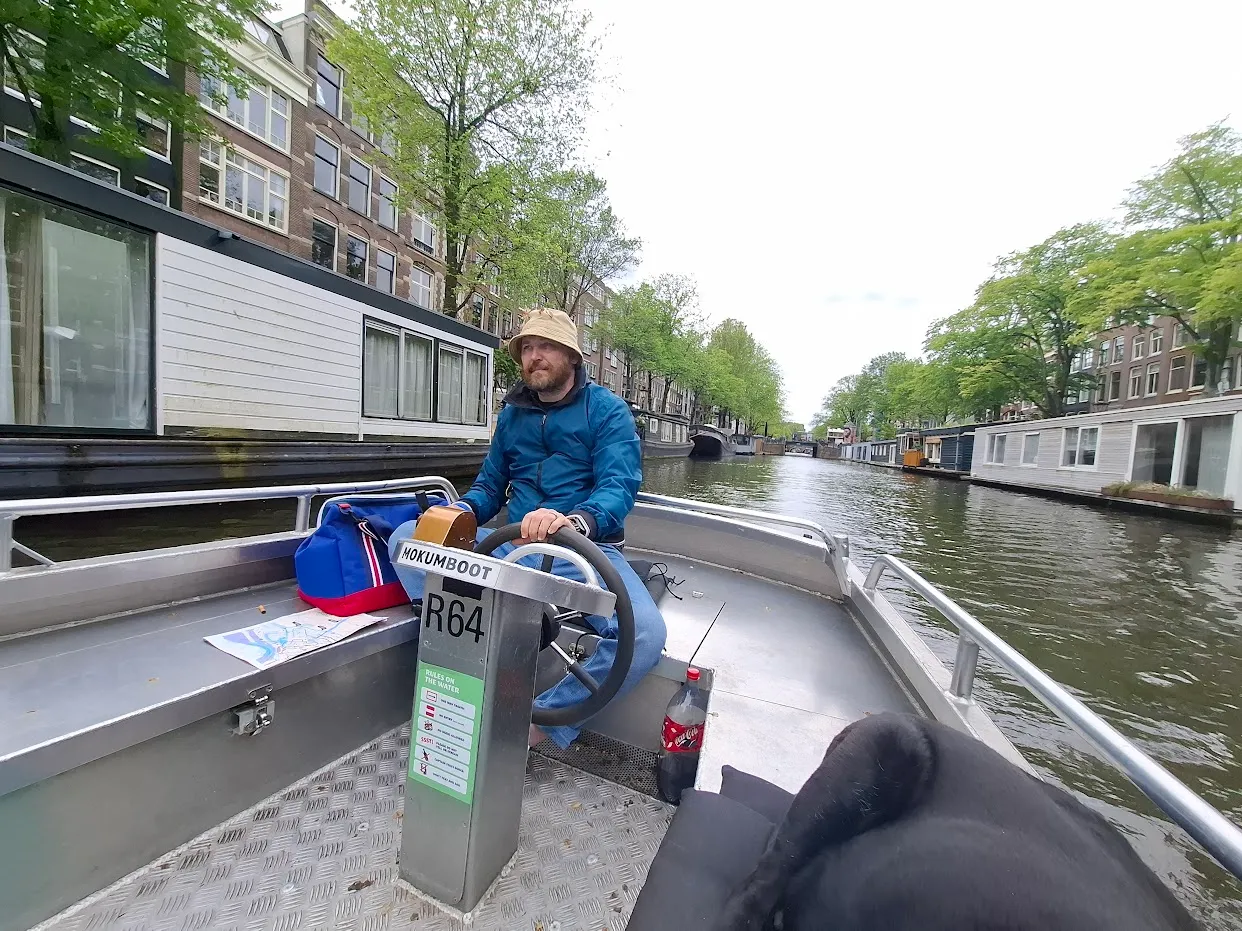
The best way to see Amsterdam is, without question, by boat. Not because it’s romantic, or peaceful, or any of that brochure nonsense, but because it is the only method that allows you to understand just how completely the city has committed itself to the idea of water being a permanent architectural feature. From the road you see houses. From a bicycle you see panic. But from a boat you see the truth: a city built by people who looked at dry land and said, “boring, let’s flood it deliberately and see what happens.”
You glide along the canals in what is essentially a floating sofa, while above you the city leans in at impossible angles like it’s trying to listen to your conversation. Bridges appear every few seconds, each one lower and more threatening than the last, as if designed by someone who actively dislikes tall people and optimism. Tourists wave from the edges, locals cycle past with the casual confidence of people who would rather fall into the canal than admit they’re wrong, and somehow it all works. Barely.
By the end, you realise the boat isn’t just transport. It’s survival equipment. The only sane way to observe a place that looks, at times, like it was assembled during a particularly ambitious plumbing experiment.
Section heading
Wrap-up
I left Amsterdam knowing that there are more nice places in the world than I had previously thought.