

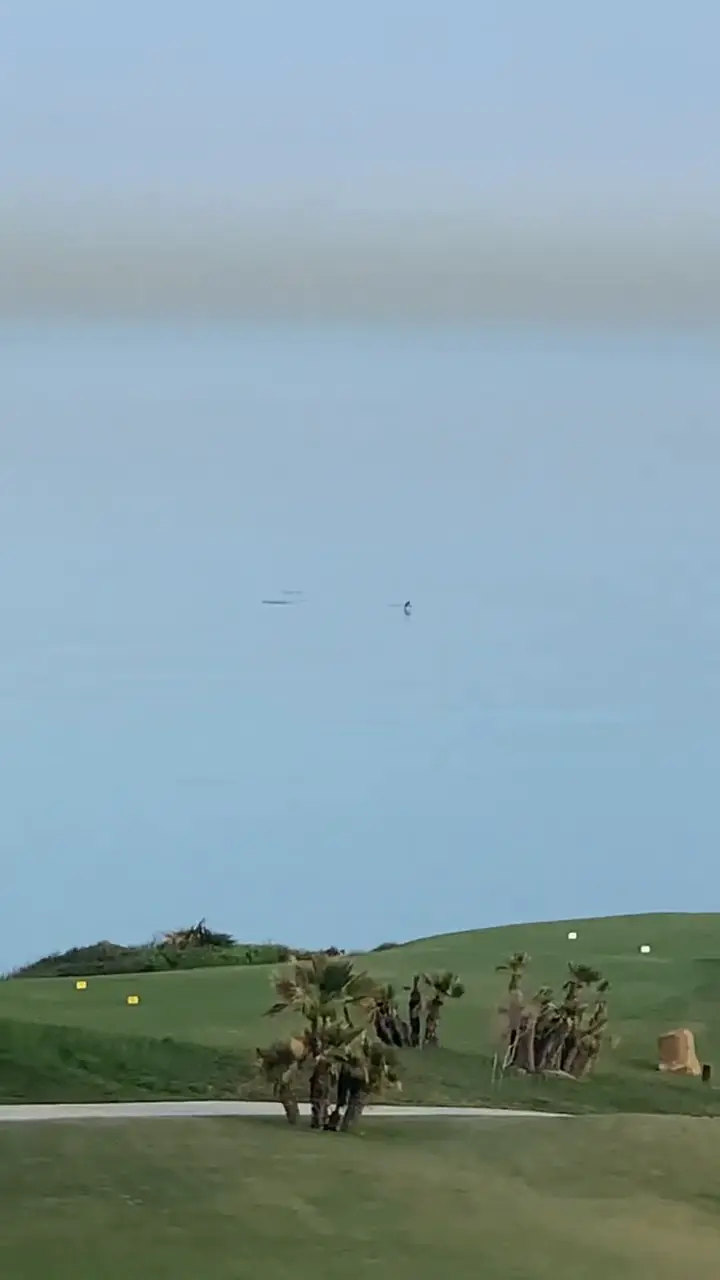
La Alcaidesa sits on the southern edge of Spain, a few kilometres from Gibraltar, where the Costa del Sol gives way to the Strait. On one side, the Atlantic is pushing through. On the other, the Mediterranean begins. The water here is not quite either.
On a May afternoon in 2023, a pod of dolphins came through.
The Strait
The Strait of Gibraltar is one of the busiest shipping lanes in the world. Container ships, tankers, ferries — there is almost always something on the horizon. But the water also belongs to things that have been using it for far longer than the ships. Common dolphins, striped dolphins, and occasionally sperm whales pass through the Strait regularly. For them it's a corridor, a feeding ground, a route.
You don't always see them. But when you do, and you're standing on a golf course on a quiet afternoon with the Rock of Gibraltar behind you and Africa visible across the water, it stops you completely.
What you’re looking at
The foreground is the La Alcaidesa links course — palm trees, green fairway, the particular shade of maintained grass that looks slightly unreal against the sea. Then the water. Then, in the middle distance, fins breaking the surface. A group of them, moving at a pace that seems unhurried until you realise how much ground they're covering.
The Strait is narrow — about 14 kilometres at its tightest point. On a clear day, the Moroccan coastline is plainly visible from here. The dolphins were somewhere between the two continents, doing what dolphins do in the Strait, which is exactly whatever they like.
There is something about seeing a wild animal in an unexpected place — not in a reserve, not on a designated whale-watching boat, but just there, in the middle of an otherwise ordinary afternoon — that doesn't wear off. You try to film it on a phone. The phone does not capture it. But you keep the video anyway.