
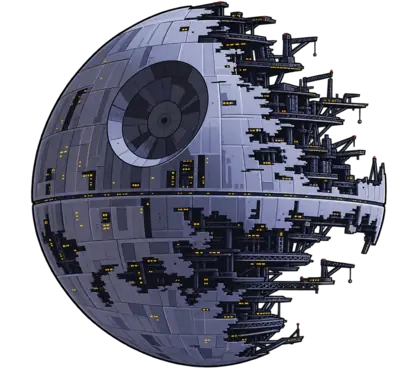
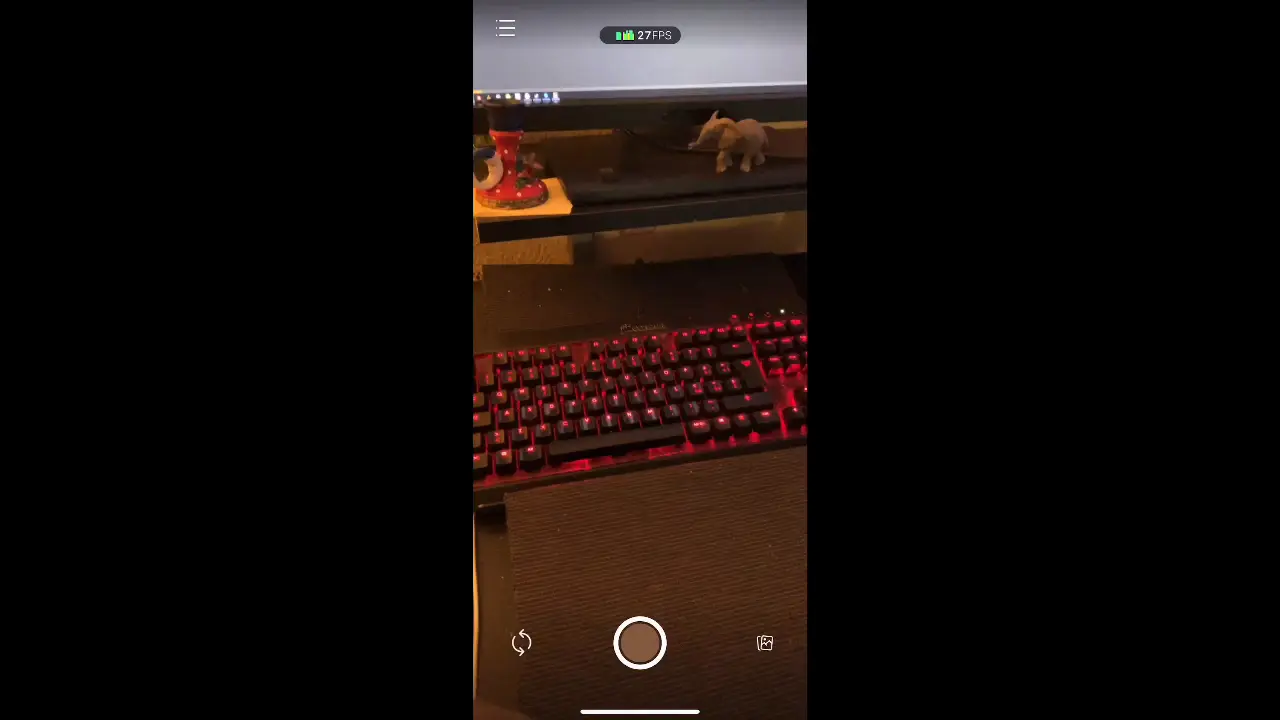
This is a phone pointed at a desk. A keyboard, some figurines, ordinary things. And then — not ordinary at all.
The clip is from December 2019, an early attempt at placing something virtual into a real space using one of the first accessible AR toolkits on mobile. No headset. No specialised hardware. Just a phone, a camera feed, and some geometry that the software was convinced belonged in the room.
What made it interesting
By 2019, AR had been a buzzword for years — but the gap between what was promised and what you could actually build was still significant. The tools were there, technically. ARKit, ARCore. Plane detection, world anchoring. The documentation was reasonable. What wasn't there yet was any sense of what to actually do with it.
That's what made the experimentation worthwhile. Not building a finished thing, but developing an instinct for how the medium behaves. How real-world lighting interacts with a virtual surface. How anchoring breaks when you move the camera too fast. How the FPS counter at the top of the screen becomes an anxiety you can't stop watching.
What AR taught me about space
Placing a 3D object in a real environment forces you to think differently about scale, proportion, and material. A model that looks fine in a 3D viewport will look completely wrong at real-world size — too shiny, too clean, too perfectly lit. The real world is messier than any default renderer assumes.
There's also something specific to AR that you can't fully appreciate from a distance: the way it makes you notice the room you're already in. Suddenly the keyboard has a surface. The shelf has depth. The space between objects becomes a place where something could exist. AR doesn't replace the world — it makes you look at it again.
Why it still matters
The tools have improved enormously since 2019. The gap between prototype and something polished has narrowed. But the core challenge hasn't changed: AR only works when the virtual object earns its place in the real scene. That's a design problem more than a technical one, and it's one that no amount of better SDKs fully solves.
The experiments from that period were rough, but they established something real: an intuition for what works in physical space that doesn't come from reading documentation or watching demos. You have to point the camera at your own desk and see what happens.