This is the first post on my site. What better way to start than the program everyone writes first? Here is “Hello, World” across a spread of languages ~ old and new, practical and absurd.
C
#include <stdio.h>

int main(void) {
    printf("Hello, World\n");
    return 0;
}
C++
#include <iostream>

int main() {
    std::cout << "Hello, World" << std::endl;
}
Rust
fn main() {
    println!("Hello, World");
}
Go
package main

import "fmt"

func main() {
    fmt.Println("Hello, World")
}
Python
print("Hello, World")JavaScript
console.log("Hello, World");TypeScript
const greeting: string = "Hello, World";
console.log(greeting);
Java
public class Main {
    public static void main(String[] args) {
        System.out.println("Hello, World");
    }
}
C#
using System;

class Program {
    static void Main() {
        Console.WriteLine("Hello, World");
    }
}
Ruby
puts "Hello, World"Swift
print("Hello, World")Kotlin
fun main() {
    println("Hello, World")
}
PHP
<?php
echo "Hello, World\n";
Shell (Bash)
echo "Hello, World"Lua
print("Hello, World")Haskell
main :: IO ()
main = putStrLn "Hello, World"
Lisp (Common Lisp)
(format t "Hello, World~%")Assembly (x86-64, Linux)
section .data
    msg db "Hello, World", 10
    len equ $ - msg

section .text
    global _start

_start:
    mov rax, 1          ; sys_write
    mov rdi, 1          ; stdout
    mov rsi, msg
    mov rdx, len
    syscall

    mov rax, 60         ; sys_exit
    xor rdi, rdi
    syscall
BASIC
10 PRINT "Hello, World"
20 END
Borland C++ 3.1
A contribution from the archives ~ Hello, World running in the classic Borland C++ 3.1 IDE.
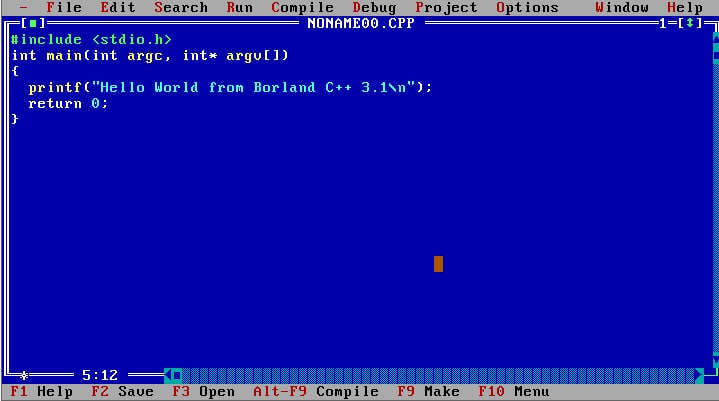
Contributed by SPK.
That’s enough to say hello. More posts ~ in slightly fewer languages ~ to follow.