Computer Vision · Synthetic Data · Python · Blender
Teaching a computer
to read hands underwater.
A computer vision model trained to recognise scuba diving hand signals — built without a single real training image. The dataset was generated entirely from 3D renders: synthetic divers, synthetic signals, synthetic depth. The model then tested on the real thing.
The problem
Scuba divers communicate through hand signals — a standardised vocabulary of gestures for marine animals, instructions, and hazards. Underwater, it is the only language available.
The question was whether a computer vision model could learn to read that language. The harder question was where to get the training data. Collecting real underwater footage of divers performing specific signals, at volume, with ground-truth labels, is expensive, slow, and requires a wetsuit.
The answer: don't. Generate it instead.
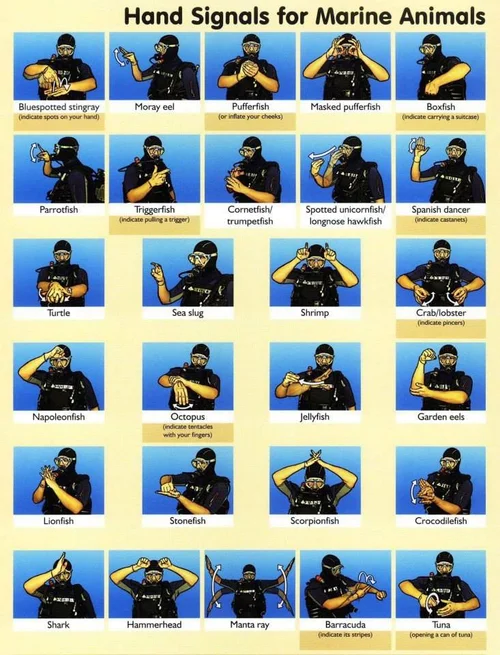
Synthetic data pipeline
The training dataset was generated entirely from 3D. A rigged human figure was posed in the target hand signals, placed in a virtual environment, and rendered from multiple angles under varying lighting conditions. Hundreds of training images per class — no pool required.
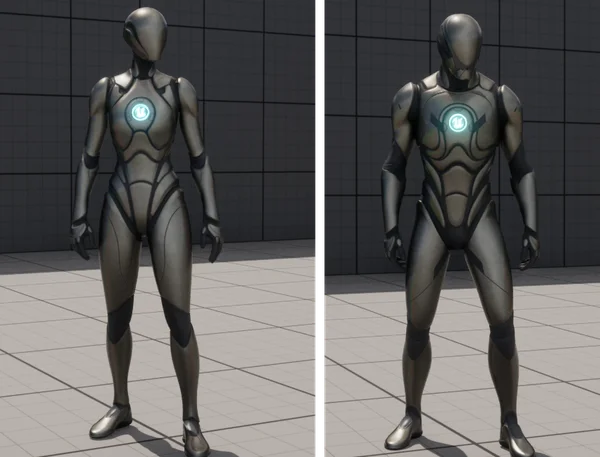
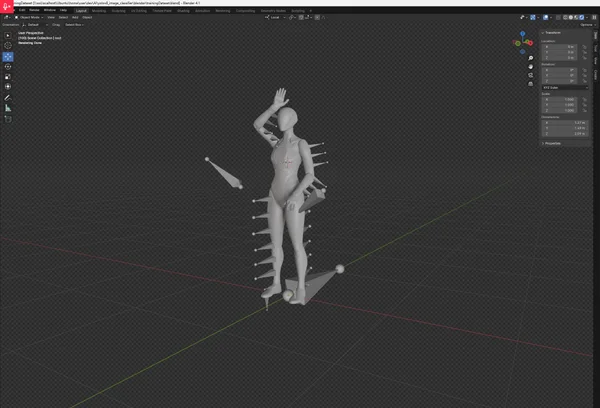
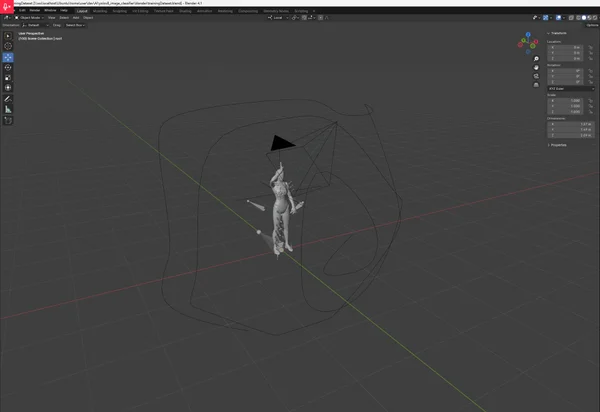
Three target classes
Bluespotted ray · Octopus · Shark — each a distinct hand signal with different hand shape, position, and motion.
Varied conditions
Multiple camera angles, lighting variations, and background conditions per signal — to prevent the model from learning shortcuts.
Training results
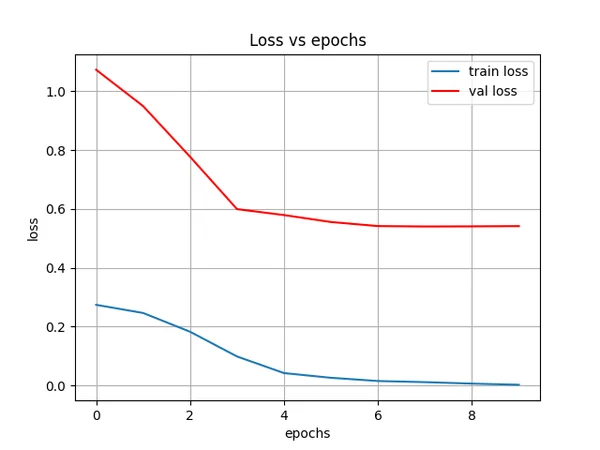
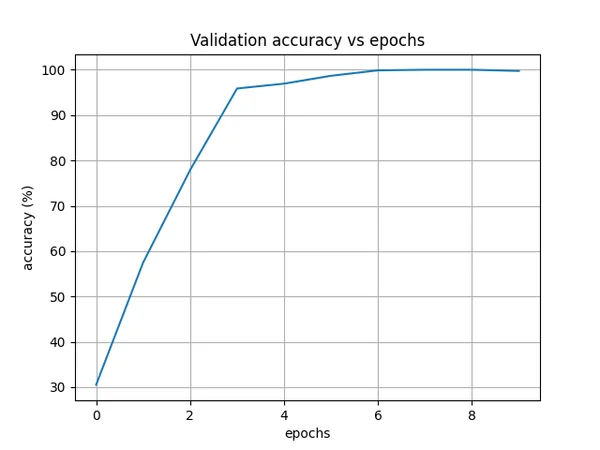
A convolutional neural network trained on the synthetic dataset. Validation accuracy reached ~100% within 10 epochs — the model learning to distinguish the three signals cleanly despite having never seen a real diver perform them.
Real-world inference
The model trained on synthetic renders was then tested against real photographs of divers performing the same signals. It had never seen real images during training.
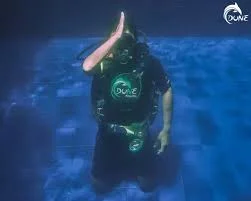
Test 1 — Shark
{0: 'bluespotted', 1: 'octopus', 2: 'shark'}
[8.83e-05, 3.69e-04, 0.9995]

# High score (0.9995) for 'shark' ✓
# Near-zero scores for all other classes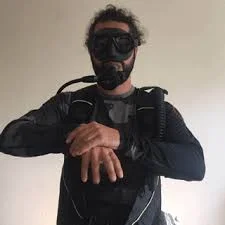
Test 2 — Octopus
{0: 'bluespotted', 1: 'octopus', 2: 'shark'}
[0.0279, 0.9468, 0.0253]

# High score (0.9468) for 'octopus' ✓
# Correct — despite being shot out of water
What this shows
Synthetic → real transfer
A model trained exclusively on 3D renders correctly classified real-world photographs it had never seen — demonstrating that synthetic data can generalise beyond its generation domain.
No real data required
The entire training dataset was generated without collecting a single real image. For domains where data collection is difficult, dangerous, or expensive, this is the practical alternative.
Domain gap handled
The octopus signal was correctly identified from a surface photograph — different environment, different lighting, different everything from the underwater training renders.